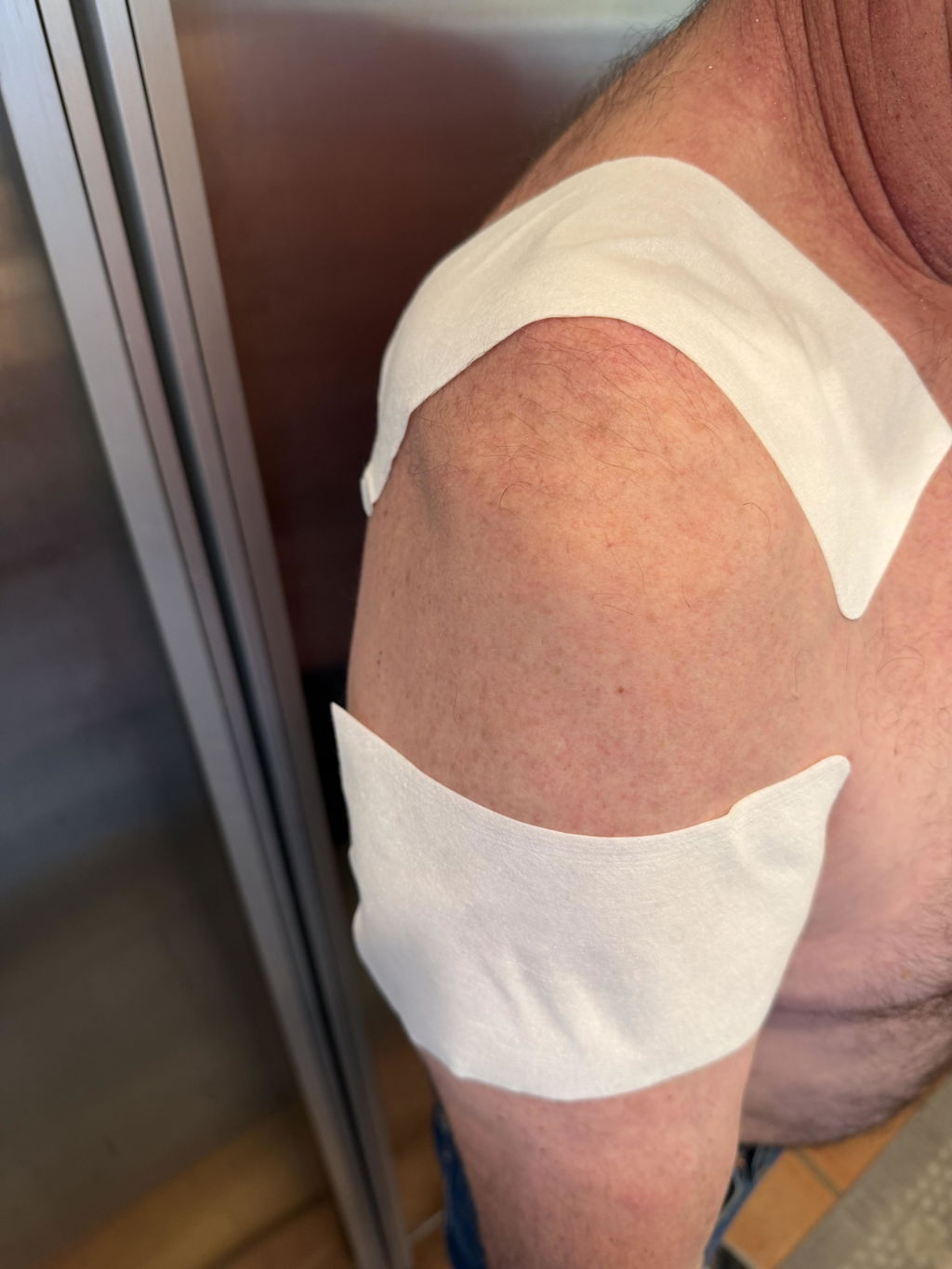
Arnica Patch vs. Lidocaine Patch: Which One Actually Helps?
Share
Most people pick one or the other based on what's at the pharmacy or what a friend recommended. But arnica and lidocaine work completely differently — and knowing the difference actually matters for whether you're going to get relief or just have something stuck to your skin for a few hours.
They Are Solving Different Problems
Lidocaine is a local anesthetic. It works by blocking sodium channels in nerve fibers, which temporarily interrupts the pain signal before it reaches your brain. It does not touch the underlying cause of the pain — it just quiets the messenger. That is genuinely useful for certain things. But it wears off, and when it does, everything that was causing the pain is still there.
Arnica works differently. The active compounds in arnica montana — particularly helenalin — appear to inhibit NF-κB, a key inflammatory signaling pathway. Arnica is not numbing anything. It is working on the inflammation itself: reducing swelling, supporting circulation, and addressing the actual tissue response that is generating the pain signal in the first place.
When Lidocaine Makes More Sense
Lidocaine tends to be more useful when the pain is nerve-dominant rather than inflammation-dominant. Post-surgical nerve sensitivity, post-herpetic neuralgia, or sharp burning skin-level pain are good examples. The pain is being generated by the nerve itself, not by inflamed tissue around it.
It is also useful for fast short-term relief when you need to get through something — a long flight, a presentation, a workout — and you do not care as much about what is happening underneath.
When Arnica Makes More Sense
Arnica is better suited for inflammatory pain: bruising, swelling, muscle soreness from overuse or impact, achy joints, stiffness that came from overextending yourself. This is the category where the root cause is tissue inflammation, not nerve pathology.
It is also the better long-term option. Because arnica addresses the inflammatory process rather than just masking the signal, repeated use can actually support recovery rather than just delay your awareness of the problem.
Arnica Patch contains five homeopathic active ingredients at 10.6% HPUS each — including Ruta Graveolens for tendon and ligament pain, Rhus Toxicodendron for joint stiffness, and Hypericum for nerve-adjacent shooting pain. The combination covers more of the pain landscape than a single-ingredient lidocaine patch does.
Can You Use Both?
Yes, and there is a reasonable case for using them at different times. Lidocaine for immediate relief when pain is acute and you need to function. Arnica once things calm down, to address the inflammation driving the pain. They work through different mechanisms and are not redundant — just do not layer them on top of each other at the same time on the same spot.
The Short Version
If your pain feels nerve-dominant — sharp, electric, burning — lidocaine is likely the better immediate fit. If your pain is inflammation-dominant — achy, swollen, bruised, stiff — arnica is doing more useful work. And if it is somewhere in the middle, which it often is, arnica addresses the underlying issue while lidocaine just quiets the signal until the patch wears off.