Your Kid's Latest Bruise, Explained (And What Actually Helps)
Share
Somewhere between the swing set and the coffee table corner, bruising just becomes part of having kids. Most of it doesn't need a doctor. But "it's fine, it'll heal on its own" doesn't make the yellow-green mark on their shin disappear any faster — and if you've ever tried to keep a 6-year-old still long enough to apply anything, you know the real problem isn't finding a remedy. It's finding one that survives contact with an actual child.
What's actually happening under the skin
A bruise is just blood pooling under the skin after small blood vessels break — usually from a bump, not an injury serious enough to need medical attention. Kids bruise more visibly than adults because their skin is thinner and their blood vessels sit closer to the surface, which is why a bump that wouldn't leave a mark on you turns into a plum-colored blotch on them. It's not a sign anything's wrong. It's just how a kid's body shows its day.
Left alone, a typical bruise clears in one to two weeks, moving through that familiar red-purple-green-yellow cycle as the body reabsorbs the blood. The question most parents actually have isn't "is this dangerous" — it's "can we make this go faster and stop them from complaining about it."
Why arnica keeps coming up
Arnica montana has a long history of topical use for exactly this — bruising and swelling — and the working theory lines up with what a lot of parents already notice: applied early, it seems to help the body clear pooled blood faster, which shows up as a bruise fading sooner. It's not a guaranteed fix and the clinical research is still mixed, but as a low-risk, non-drug option for something as ordinary as a bruise, it's earned its spot in a lot of family medicine cabinets.
Why a patch beats digging through a first-aid kit
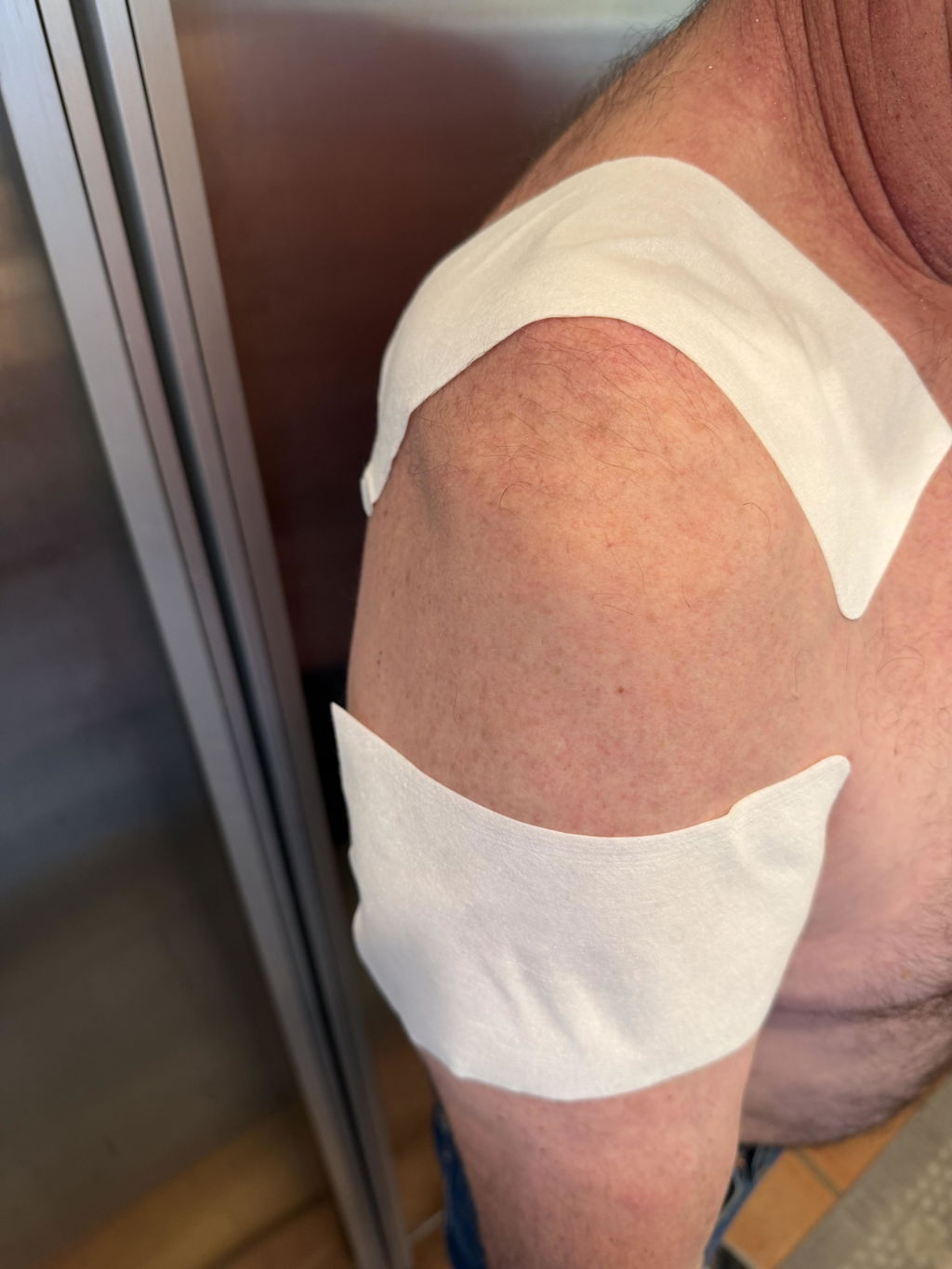
Here's the actual parenting problem: creams and gels require reapplying multiple times a day, on a kid who is not going to sit still for it and is definitely going to touch something else five minutes later. A patch solves that differently — apply it once, and it stays on and keeps working without you having to chase anyone down at nap time to reapply.
It also means no greasy residue on clothes, no rubbing it in near a ticklish kid who won't hold still, and no guessing whether enough actually made it onto the skin. For a bruised knee under a sock or an elbow that's going straight back into a sandbox, that matters more than it sounds like it would.
Using them with kids — a few ground rules
Apply to unbroken skin only, away from the eyes and mouth, and never on a cut or scrape. For younger kids, keep an eye on the patch to make sure it's not being peeled off and mouthed — check the product packaging for age guidance, and when in doubt, ask your pediatrician before using anything topical on a child under the age recommended on the label. This isn't a substitute for medical care if a bump seems worse than a normal bruise — significant swelling, a bruise that keeps growing, or one that shows up without a clear cause is worth a call to your doctor.
The bottom line
Bruises are one of the least serious, most constant parts of raising an active kid — and also one of the easiest things to actually do something about. A patch that goes on once and doesn't need babysitting is a small thing, but if you've ever tried to reapply cream to a squirming toddler, you know exactly how much that small thing is worth.
Always check product packaging for age guidance and consult your pediatrician before using on young children. This content is for informational purposes and isn't a substitute for medical advice.