What Actually Helps Bruising After Surgery? Here's What Patients Are Using
Share
Nobody warns you about the bruising. You prepare for the incision, the swelling, maybe the pain — but the deep purple-to-yellow bruising that shows up days later and sticks around for weeks? That part catches most people off guard.
If you've had a facelift, rhinoplasty, liposuction, or any procedure where bruising is part of the deal, you've probably already Googled "how to get rid of bruising faster" more than once. Here's what's actually going on under your skin, and why more patients are reaching for arnica patches instead of the tub of cream they bought and forgot to reapply.
Why bruising after surgery is different
Surgical bruising isn't like bumping your shin on a coffee table. When tissue is disturbed during a procedure, small blood vessels break and leak blood under the skin — that's the bruise. Because surgical trauma affects more tissue at once, the bruising tends to be deeper, spread further, and take longer to clear than the bruises you're used to. Two to three weeks isn't unusual. For some procedures, it's longer.
That timeline matters if you're trying to get back to work, travel, or just stop fielding "are you okay?" questions from strangers.
What arnica is actually doing
Arnica montana has been used topically for bruising and swelling for a long time, and while it's not a miracle drug, the traditional use lines up with what a lot of patients report: less visible bruising and a faster fade when it's applied early and consistently. The working theory is that arnica supports the body's natural reabsorption of the blood pooled under the skin, which is what a bruise actually is.
Worth being straight about this: research on topical arnica is still mixed, and it's not a replacement for whatever aftercare your surgeon gave you. It's a supporting player, not the whole recovery plan.
Why a patch instead of a cream
This is the part patients usually don't think about until they're mid-recovery and frustrated. Post-op skin is often tender, sometimes right next to an incision you're not supposed to touch. A cream means rubbing something into that area — not ideal — and it means reapplying multiple times a day, which people forget to do by day three.
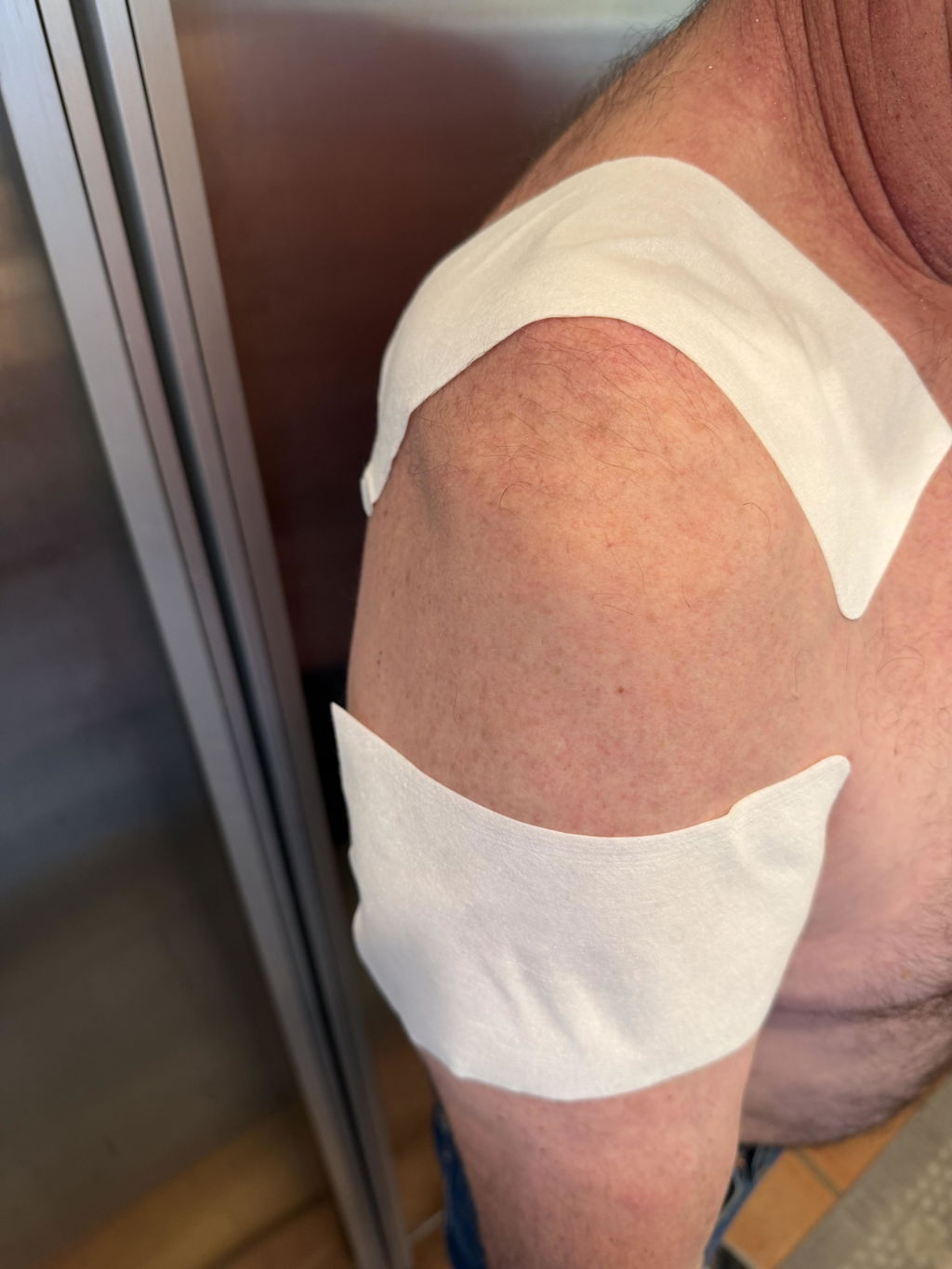
A patch stays put. You apply it once, it sits there working for hours, and it doesn't rub off on your pillow, your collar, or your surgical garment. For anyone managing bruising around the eyes, jawline, or ribs after a procedure, "don't have to touch it again for 12 hours" is a real advantage, not a nice-to-have.
How patients are actually using them
Most people apply patches to the bruised area itself — not directly over an open incision — starting as soon as their surgeon clears them for topical products, which is often within the first day or two. They're replaced roughly once or twice a day depending on wear time, and patients tend to keep using them until the bruising fades, not just for the first few days.
If you're not sure when it's safe to start, that's a question for your surgeon, not a blog post. But once you're cleared, patches tend to fit into a recovery routine a lot more easily than remembering to reapply cream on a schedule.
The bottom line
Bruising is one of the most visible, most uncomfortable parts of surgical recovery, and it's also one of the most manageable if you're using the right tools. Arnica patches won't erase your recovery timeline, but for a lot of patients, they make the visible part of it shorter and a lot less high-maintenance than a cream regimen.
Always follow your surgeon's specific aftercare instructions. This content is for informational purposes and isn't a substitute for medical advice.