Maximizing Arnica Plant Benefits: A Natural Pain Relief Powerhouse
Share
What Is Arnica? The Plant Behind Natural Pain Relief
If you have ever reached for something other than ibuprofen after a bruise or a sore muscle, there is a good chance arnica was on the label. It shows up in creams, gels, tablets, and now patches — but most people have no idea what it actually is, where it comes from, or why it works. Here is the full picture.
Arnica Is a Flowering Mountain Plant
Arnica montana is a bright yellow daisy-like wildflower that grows in the mountain meadows of Europe and Siberia. It has been used in folk medicine for hundreds of years — pressed into oil, brewed into tinctures, and applied to skin for everything from falls and sprains to post-battle bruising. Traditional healers in the Alps used it so regularly that another common name for it is "mountain tobacco" or "leopard's bane," depending on the region.
Today, arnica is one of the most studied botanicals in homeopathic and complementary medicine. It is listed in the Homeopathic Pharmacopoeia of the United States (HPUS) — the official reference for homeopathic medicines in this country — and is regulated by the FDA as an over-the-counter homeopathic drug.
What Makes Arnica Work
The active compounds in arnica montana are sesquiterpene lactones, primarily helenalin and dihydrohelenalin. Research suggests these compounds inhibit the activation of NF-κB, a signaling protein that plays a central role in the inflammatory response. In plain terms: arnica appears to interrupt part of the process your body uses to create swelling and pain after an injury.
Arnica also contains flavonoids, thymol derivatives, and carotenoids that contribute to its antioxidant and circulation-supporting properties. Some researchers believe improved local circulation is part of why arnica seems to help bruises clear faster — it may support the reabsorption of blood pooled under the skin.
A 2025 study published in PMC examining arnica extract in a hydrogel patch format found statistically significant reductions in inflammation and pain response compared to control groups. Topical delivery specifically — as opposed to oral — is increasingly supported in the literature because it bypasses digestion and delivers the active compounds directly to the tissue.
Homeopathic vs. Herbal Arnica — What Is the Difference
This is where people get confused. There are two very different types of arnica products on the market.
Herbal arnica uses the actual plant extract at a measurable concentration. Raw arnica montana is toxic if taken internally in significant amounts, so herbal topical products use dilute plant extract. Boiron Arnicare Gel, for example, contains 7% arnica montana flower extract.
Homeopathic arnica uses arnica prepared according to the HPUS monograph, at specific dilution levels. Homeopathic preparations are regulated by the FDA and must meet purity and labeling standards. Arnica Patch uses homeopathic arnica montana at 10.6% HPUS — a concentration listed for topical analgesic use.
Neither type should be applied to broken skin or open wounds.
What Arnica Is Used For
Topical arnica is most commonly used for:
- Bruising — one of its oldest and best-documented uses; plastic surgeons regularly recommend it after rhinoplasty, facelift, and body contouring procedures
- Muscle soreness — popular with athletes and active adults after training
- Joint pain — especially for osteoarthritis of the knee and hand; a randomized controlled trial published in Rheumatology found arnica gel comparable to ibuprofen gel for knee osteoarthritis
- Post-surgical swelling — used topically after minor procedures to support faster visible recovery
- General aches — the catch-all reason people keep a tube of arnica in the medicine cabinet
Why a Patch Delivers It Better Than a Cream
The problem with arnica creams and gels is delivery. You apply them, they absorb quickly, and the effect fades within an hour or two. You have to keep reapplying. On a sore knee or shoulder, that gets old fast — especially overnight.
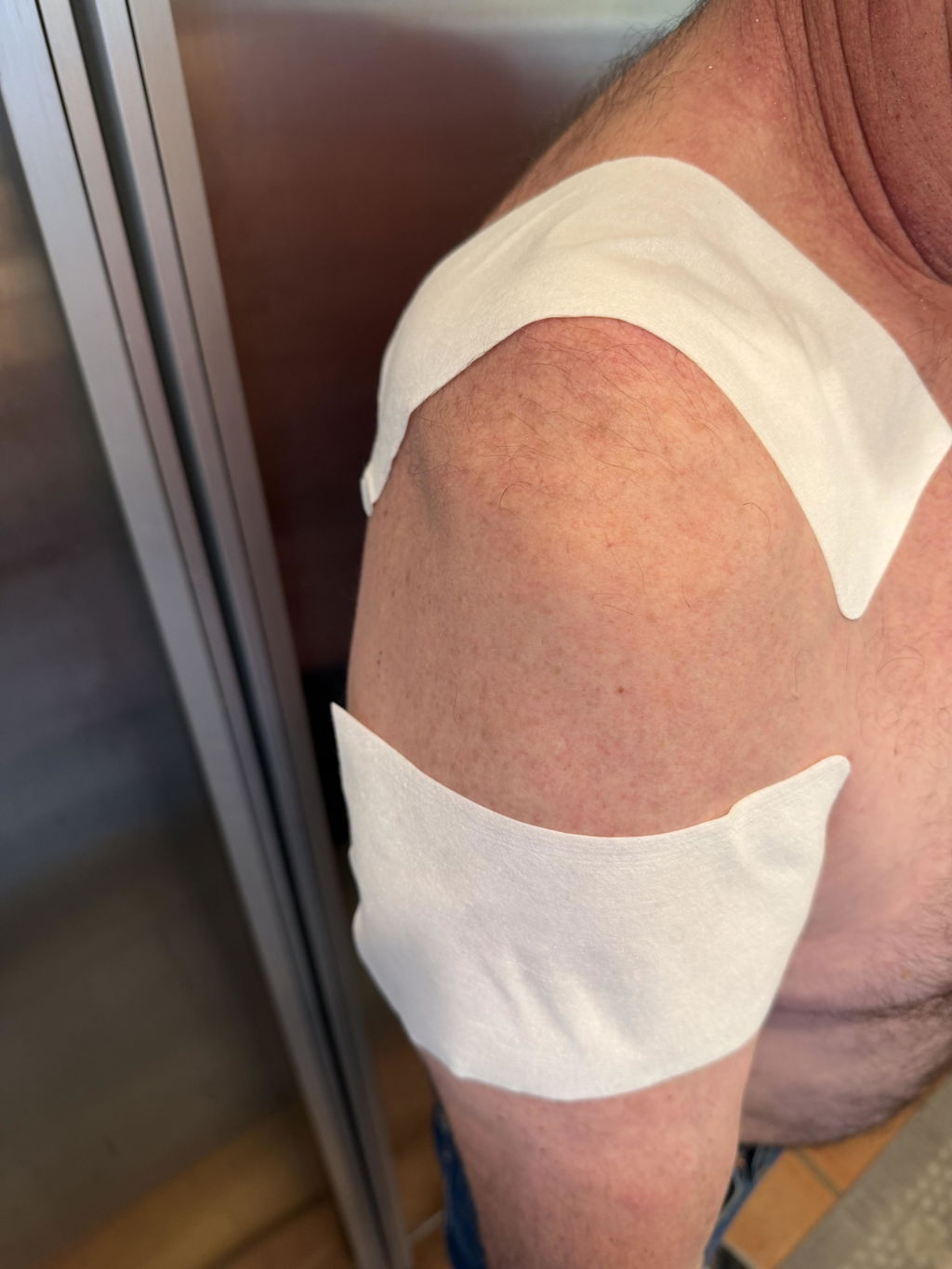
A hydrogel patch works differently. The patch acts as a reservoir: arnica and the other active ingredients are suspended in the gel matrix and released slowly, at a controlled rate, over up to 12 hours. You apply it once and it works through a full day or a full night without any attention from you.
The Arnica Patch uses five homeopathic active ingredients — not just arnica alone — chosen for the specific types of pain and tissue damage that often occur together: Arnica Montana for bruising and inflammation, Rhus Toxicodendron for joint stiffness, Ruta Graveolens for tendon and ligament pain, Hypericum Perforatum for nerve pain, and Ledum Palustre for deep joint aching. Each is at 10.6% HPUS.
The patch is also XL (8x10 inches) and cut-to-fit — you trim it with scissors to any size or shape before applying, so it actually covers the area you need to treat, whether that is a knee, a shoulder, the lower back, or a bruised cheekbone after surgery.
Is Arnica Safe
Topical arnica has a strong safety profile when used as directed. It is not absorbed systemically in significant amounts through intact skin, so it does not carry the cardiovascular, gastrointestinal, or kidney risks associated with oral NSAIDs. Arnica Patch is NSAID-free, paraben-free, latex-free, and contains no artificial dyes.
Do not apply arnica to broken skin, open wounds, or near the eyes. Stop use if skin irritation develops. If you are pregnant or breastfeeding, consult a healthcare provider before use. Do not use if you are allergic to plants in the Asteraceae (daisy) family.
The Bottom Line
Arnica is a mountain plant with a centuries-long track record and a growing body of modern research behind it. For people who want real relief from bruising, muscle soreness, and joint pain without NSAIDs or numbing agents, it is one of the most credible natural options available. The main challenge has always been getting it to work long enough — which is exactly the problem a slow-release hydrogel patch solves.